
Quick answer
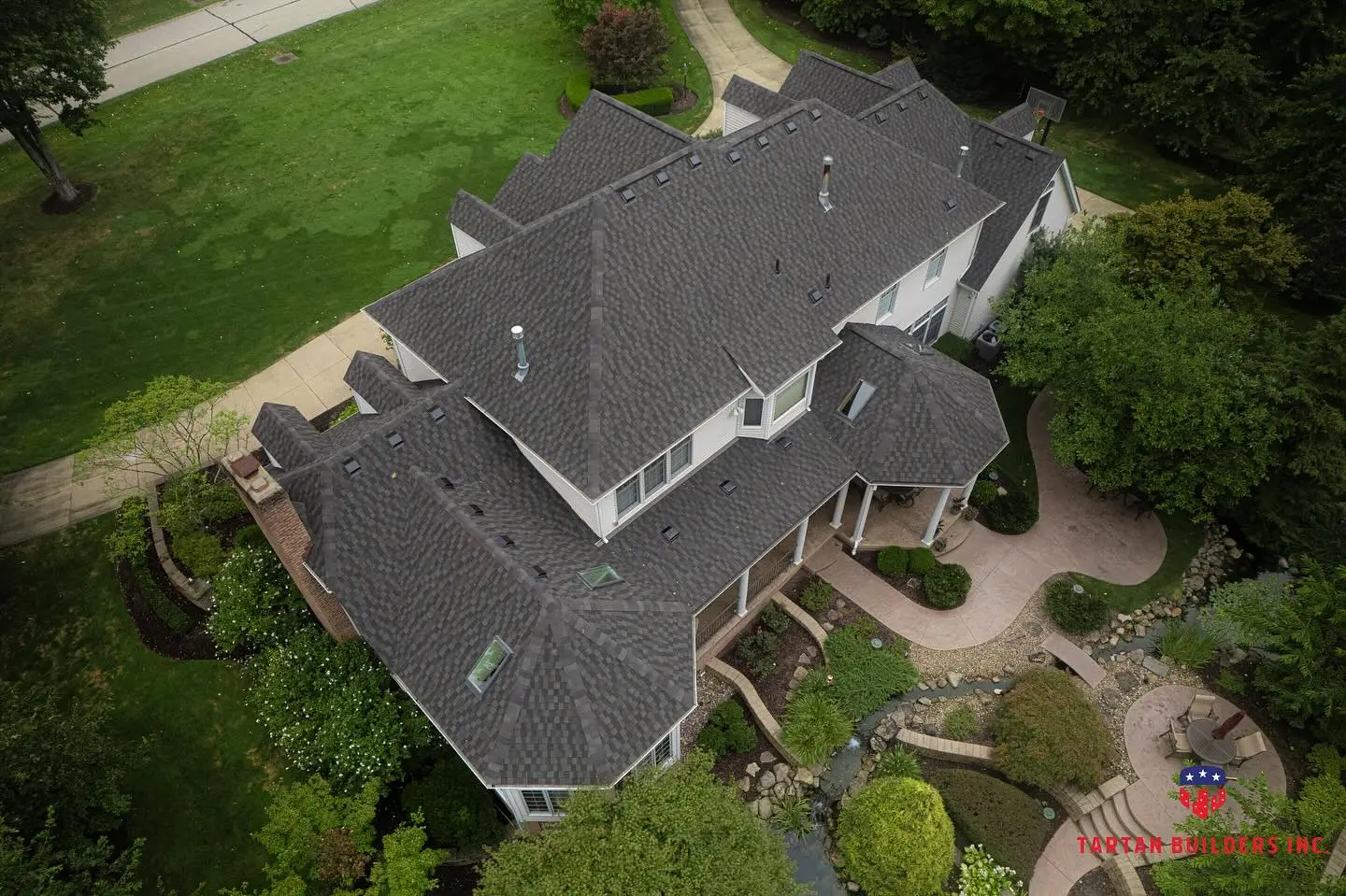
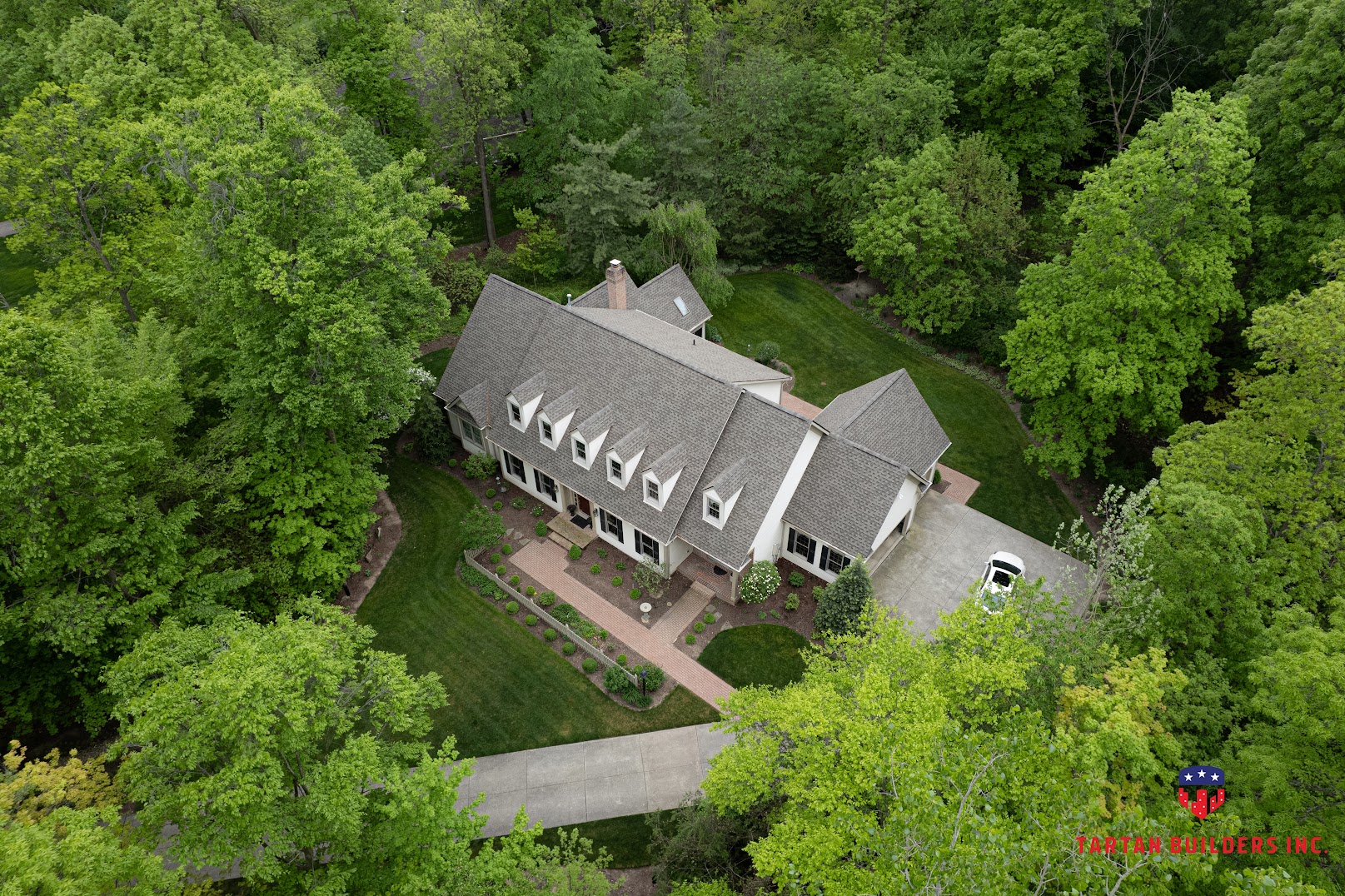
A roof replacement is a tear-off down to the deck and a completely new system built back up — underlayment, ice barrier, starter, field shingles, ridge cap, and the ventilation that makes the whole assembly work. It is not the same as layering new shingles over old, which we do not do.
- Full tear-off to the deck. We never lay new shingles over old ones.
- GAF Timberline shingles, ice-and-water shield, synthetic underlayment and new flashing.
- Most Ohio homes are done in one to two days, and we pull the permit.
- Golden Pledge coverage is available because we are GAF Master Elite.
Day One: Tear-Off and Deck Inspection
We protect the landscaping and set up debris containment before anything comes off. Then the old roof comes off completely, down to bare wood.
This is the moment that matters, because it is the first time anyone can actually see the deck. Rotten or delaminated sheathing gets replaced — we cannot nail a new roof into soft wood and expect it to hold. Deck replacement is priced separately because there is no honest way to quote it before tear-off, and any contractor who includes a fixed deck allowance is either padding the estimate or planning a change order.
Building the System Back Up
Ice-and-water shield goes down first along the eaves, in the valleys, and around every penetration. In Ohio this is not optional — code requires it, and freeze-thaw ice damming is exactly what it exists to stop.
Synthetic underlayment covers the remaining field. It sheds water if weather arrives mid-job and it does not wrinkle the way felt does.
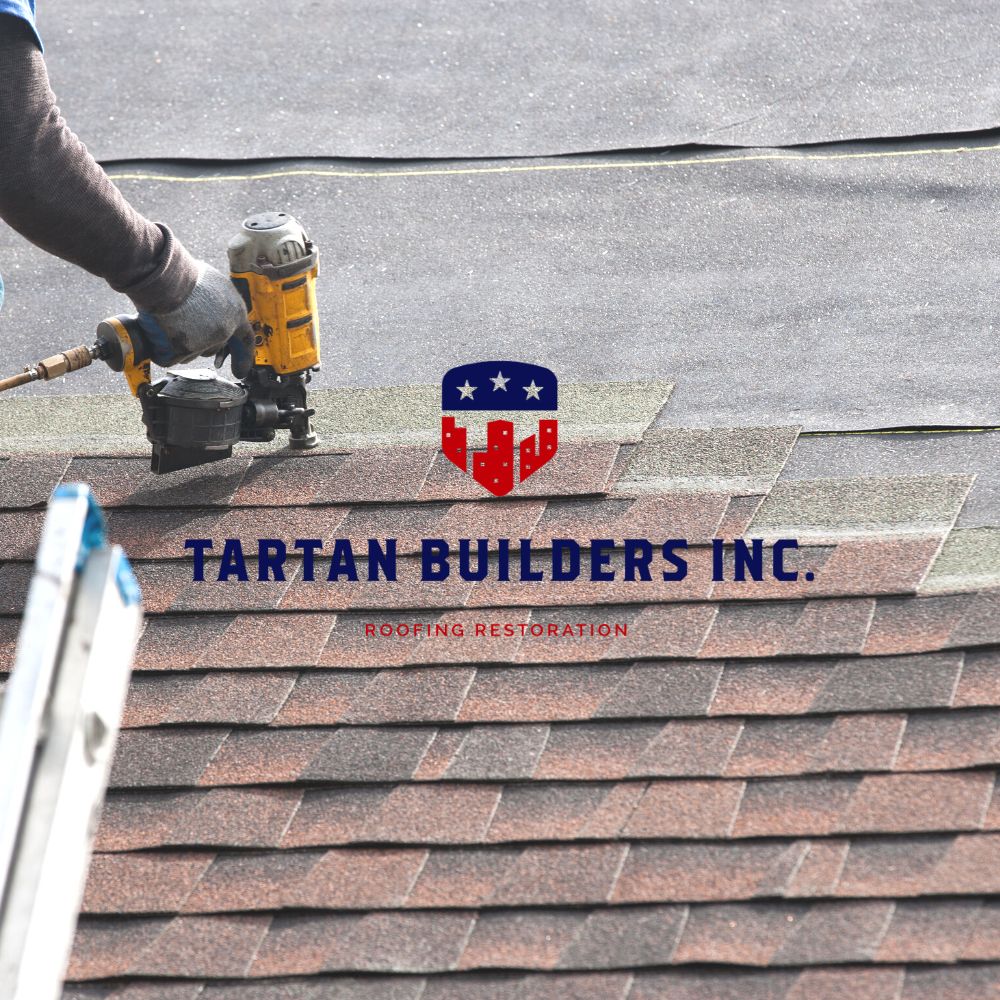
Then starter strip along the eaves and rakes, field shingles nailed to GAF specification, flashing at every wall and chimney, and ridge cap over a continuous ridge vent.
- Ice-and-water shield at eaves, valleys, and penetrations
- Synthetic underlayment across the field
- Starter strip at eaves and rakes
- GAF Timberline architectural shingles, nailed to spec
- New step and counter flashing — never reused
- Ridge vent and matching ridge cap
The Details That Decide Whether It Lasts
Nail placement is the big one. Shingles have a narrow nailing zone, and a nail driven high misses the layer below entirely. The roof looks perfect on day one and starts shedding shingles in year three. This is the single most common install failure and it is invisible from the ground.
Reused flashing is the second. Pulling old step flashing off a wall and putting it back saves maybe an hour and guarantees a leak at that junction. We replace it.
Ventilation is the third, and it is the one nobody thinks about. A roof with exhaust but no intake pulls conditioned air out of the house and cooks the shingles from underneath. It will not leak, it will just fail early, and the material warranty will not cover it.
Cleanup and Final Walkthrough
We run magnets across the entire property — driveway, lawn, flowerbeds — usually more than once. Roofing nails in a lawn find bare feet and car tires eventually.
Then we walk the job with you before we leave. You get photo documentation of the finished work, your warranty paperwork, and the registration details for the GAF coverage.
Warranty Coverage
Because we are Master Elite, we can write the GAF Golden Pledge — the only GAF warranty that covers workmanship as well as materials, backed by GAF rather than by us.
That distinction matters more than it sounds. A standard material warranty pays for shingles if the shingles are defective. It pays nothing if they were installed wrong, which is how the overwhelming majority of roofs actually fail.