
Quick answer
Hail is the most commonly missed damage in residential roofing, because it is the only major damage type that leaves a roof looking completely normal.
- Hail as small as one inch can bruise asphalt shingles.
- Damage is a soft spot where the mat has cracked, not always a visible dent.
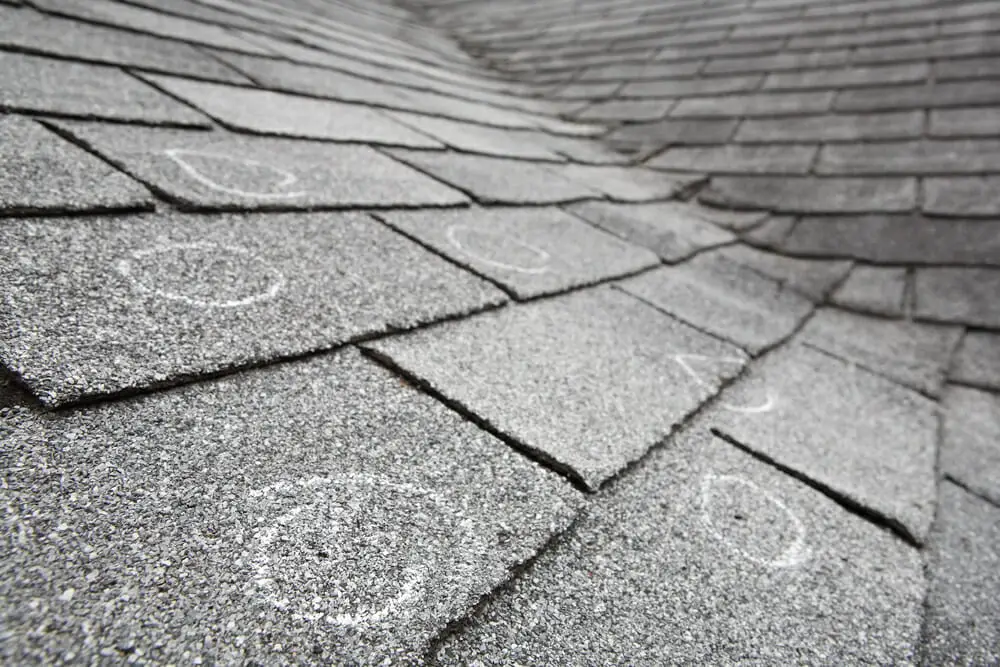
- We mark test squares on each slope and count strikes, the way adjusters measure it.
- Siding, gutters, vents and window wraps are documented too.
What Hail Actually Does to a Shingle
An asphalt shingle is a fibreglass mat, saturated in asphalt, with ceramic granules embedded on the surface. The granules are not decoration — they are the UV shield. Asphalt exposed to direct sun degrades quickly.
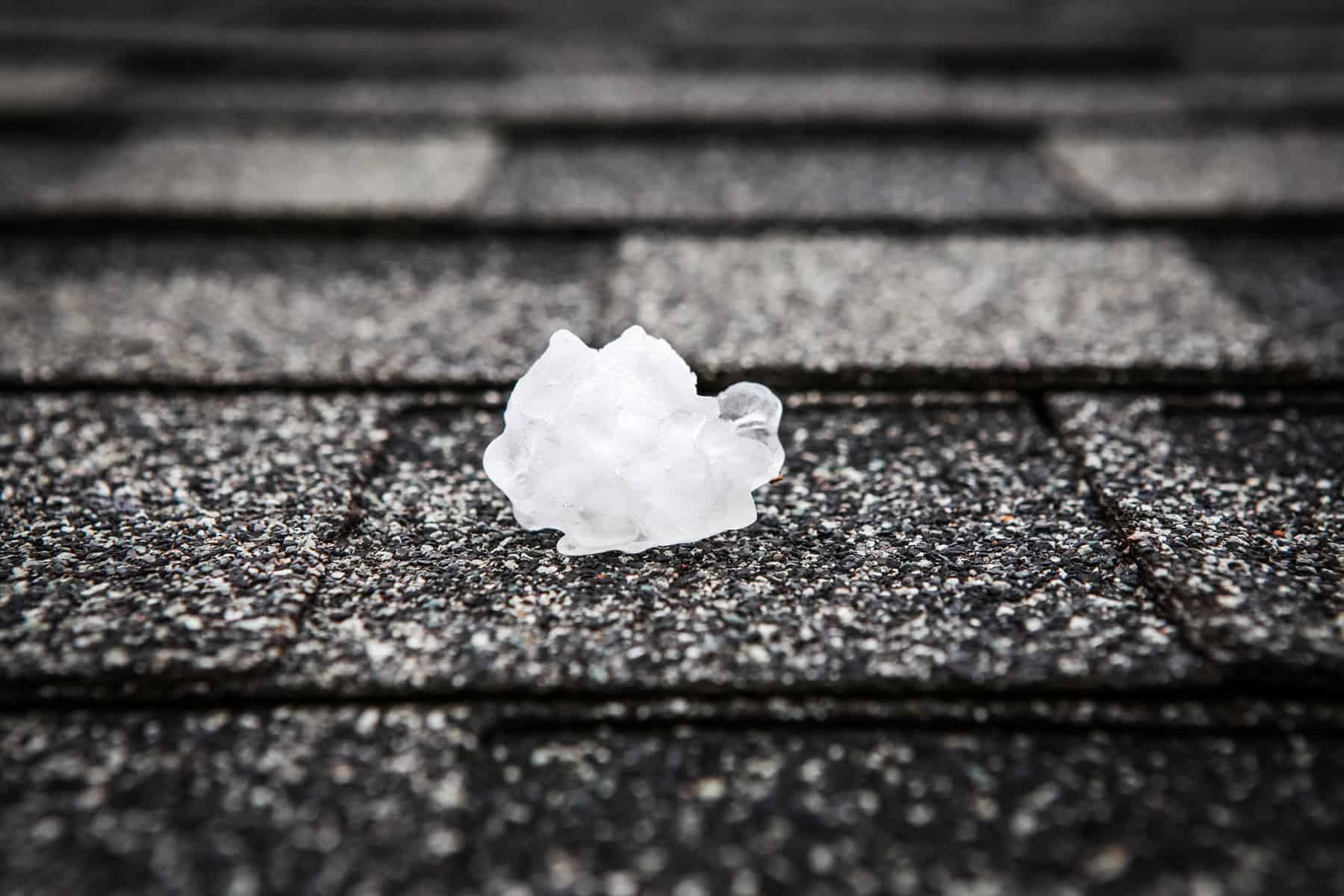
When a hailstone hits with enough energy, it knocks granules loose and compresses the mat underneath. That is a bruise. Press it and it feels soft, like a bruise on fruit. It does not crack, does not tear, and does not leak.
What it does is expose bare asphalt to sunlight. That spot then ages at a dramatically accelerated rate compared to the rest of the roof, cracks, and starts letting water through — typically eighteen months to three years after the storm.
What Size Hail Causes Damage
The common assumption is that it takes golf-ball hail. It does not.
One-inch hail — roughly a quarter — can bruise an asphalt roof, particularly on an older roof where the mat has already lost flexibility. Wind driving the hail sideways matters as much as diameter, which is why the same storm can leave one side of a street fine and the other side damaged.
Age matters too. A three-year-old roof shrugs off hail that will bruise a fifteen-year-old roof, because the asphalt is still pliable enough to absorb the impact.
Everything Hail Damages, Not Just the Roof
Roof claims get filed. The rest gets forgotten, and it is often claimable in the same event.
- Siding — vinyl cracks rather than dents, often in hairline fractures that are easy to miss
- Gutters and downspouts — aluminium dents visibly; this is frequently the clearest evidence a storm was severe
- Fascia and soffit wraps — aluminium wrap dents the same way gutters do
- Window screens and wraps — bent or torn
- Air conditioning condenser fins — flattened fins reduce efficiency and are commonly covered
- Decks, fences, and outbuildings — often included under other structures coverage
How We Document It
Documentation is what determines whether a claim is approved, and it is the part most contractors do badly.
We chalk and photograph individual hail strikes with a reference for scale. We do test squares — a marked ten-by-ten-foot area on each slope with strike counts, which is the standard most carriers use to judge whether damage is widespread enough to warrant replacement rather than repair. We photograph the soft metals, because dented gutters and vents corroborate the roof damage. And we pull the date of loss from weather data so the claim ties to a specific verified event.
That package is what we hand the adjuster. It is considerably harder to deny a documented test square than a general assertion that the roof looks hailed.

Why Test Squares Decide the Claim
Most carriers use a threshold of hail strikes within a ten-by-ten-foot test square to determine whether a slope needs replacing rather than repairing. Thresholds vary, and adjusters apply them with some discretion.
This is why having someone on the roof during the adjuster meeting matters so much. If the adjuster tests one slope and it falls just under threshold, but the north-facing slope that took the brunt of the storm was not tested, the claim gets underwritten. Knowing which slopes took the hit, and asking for them to be tested, changes outcomes.